

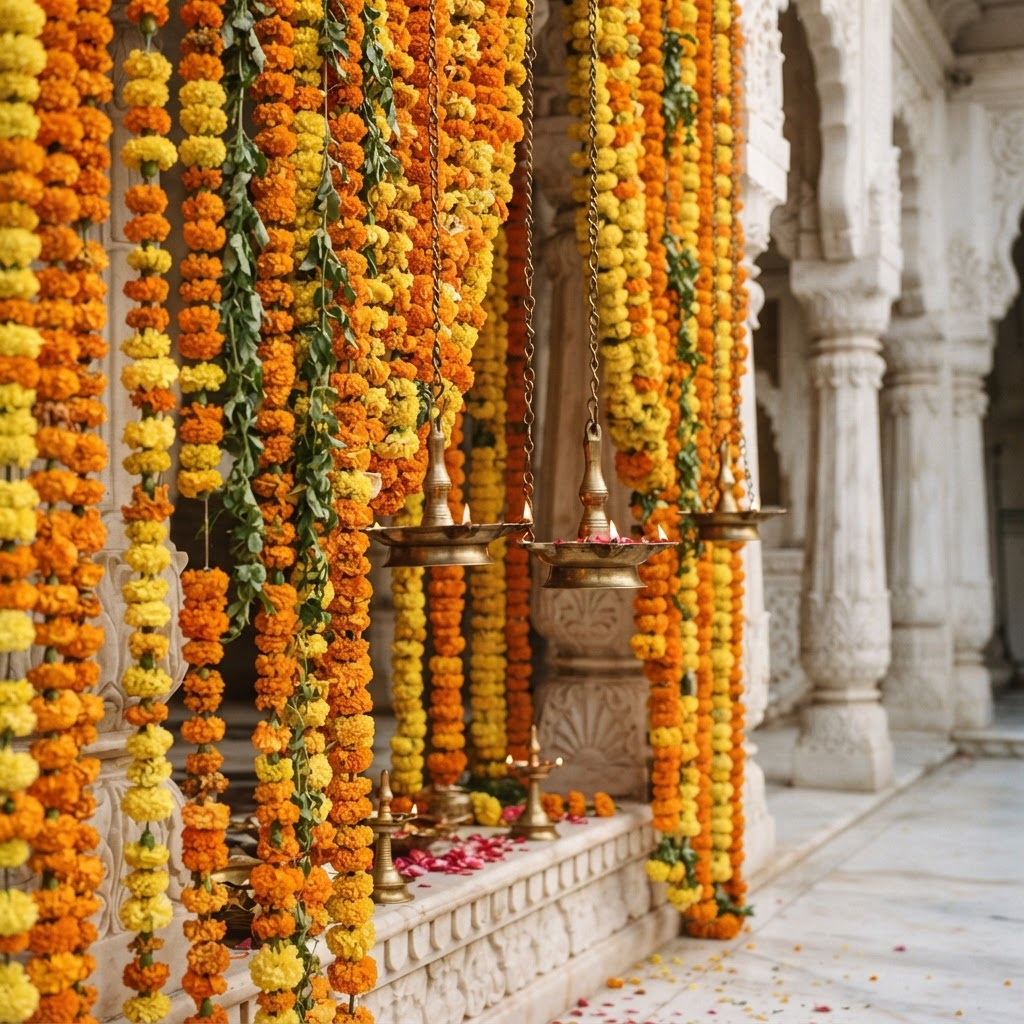
North Indian classic
Marigold & Marble
The genda phool wall never dates. Bulk marigold is the cheapest way to fill a big hall, and it reads rich against white marble and brass.
- Marigold
- Deep saffron
- Marble white
- Antique brass
Available in 240 cities across 36 states & UTs — verified vendors, real reviews
Loading
Ideas
Four colour stories that work in real Indian venues, and a straight explanation of what happens at each ritual. Every idea links to the vendors near you who can put it together.
North Indian classic
The genda phool wall never dates. Bulk marigold is the cheapest way to fill a big hall, and it reads rich against white marble and brass.
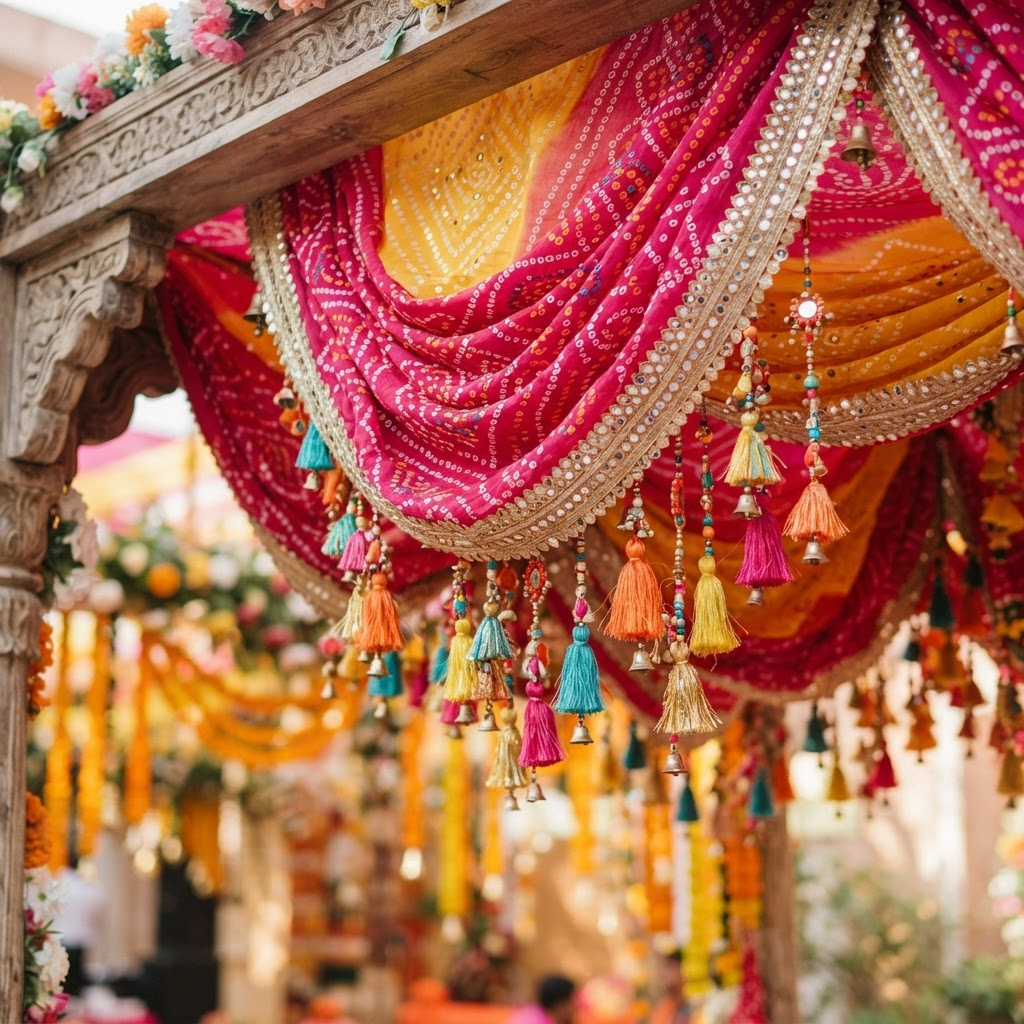
Rajasthan & Gujarat
Tie-dye canopies, gota trim and mirror work. Loud on purpose — best for daytime mehendi and sangeet where the sun does half the work.
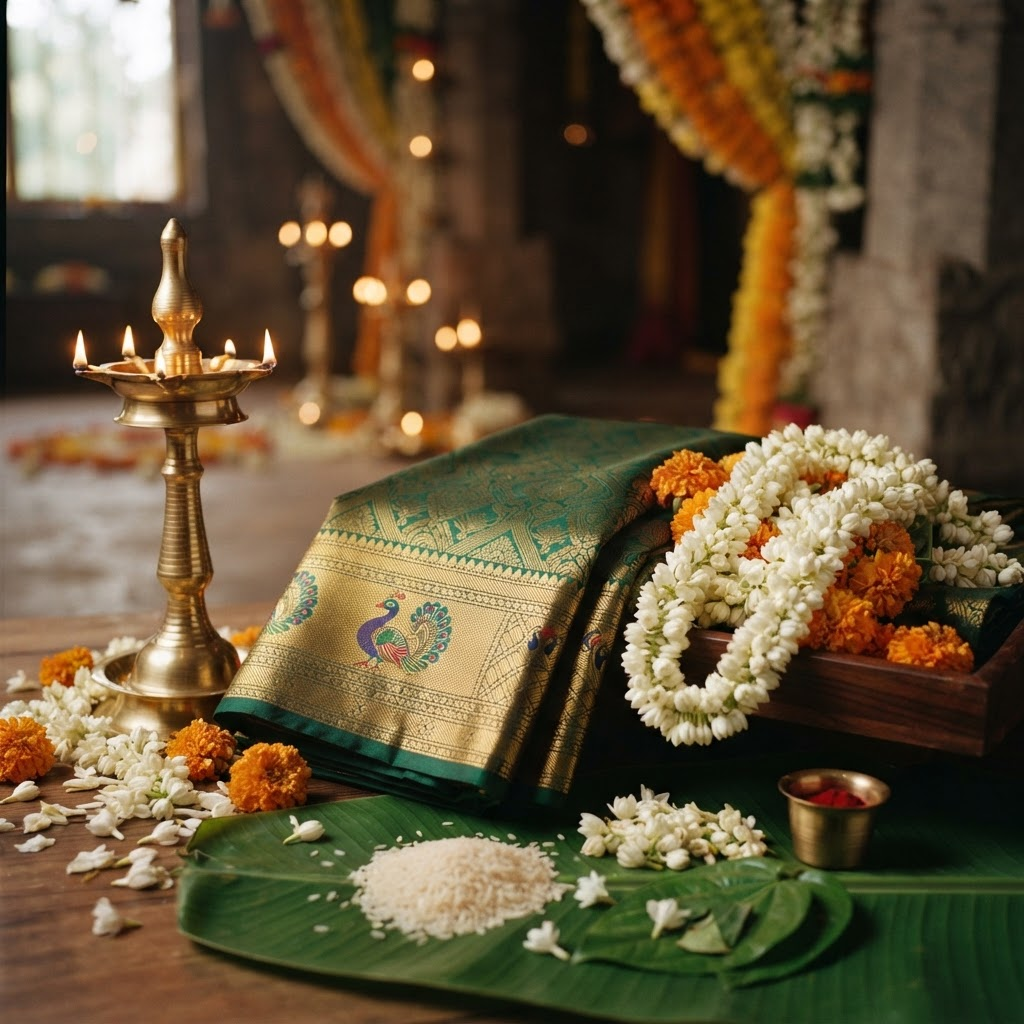
South Indian
Kanjeevaram green with zari gold, jasmine by the metre and banana stems at the entrance. Built for morning muhurtham light.
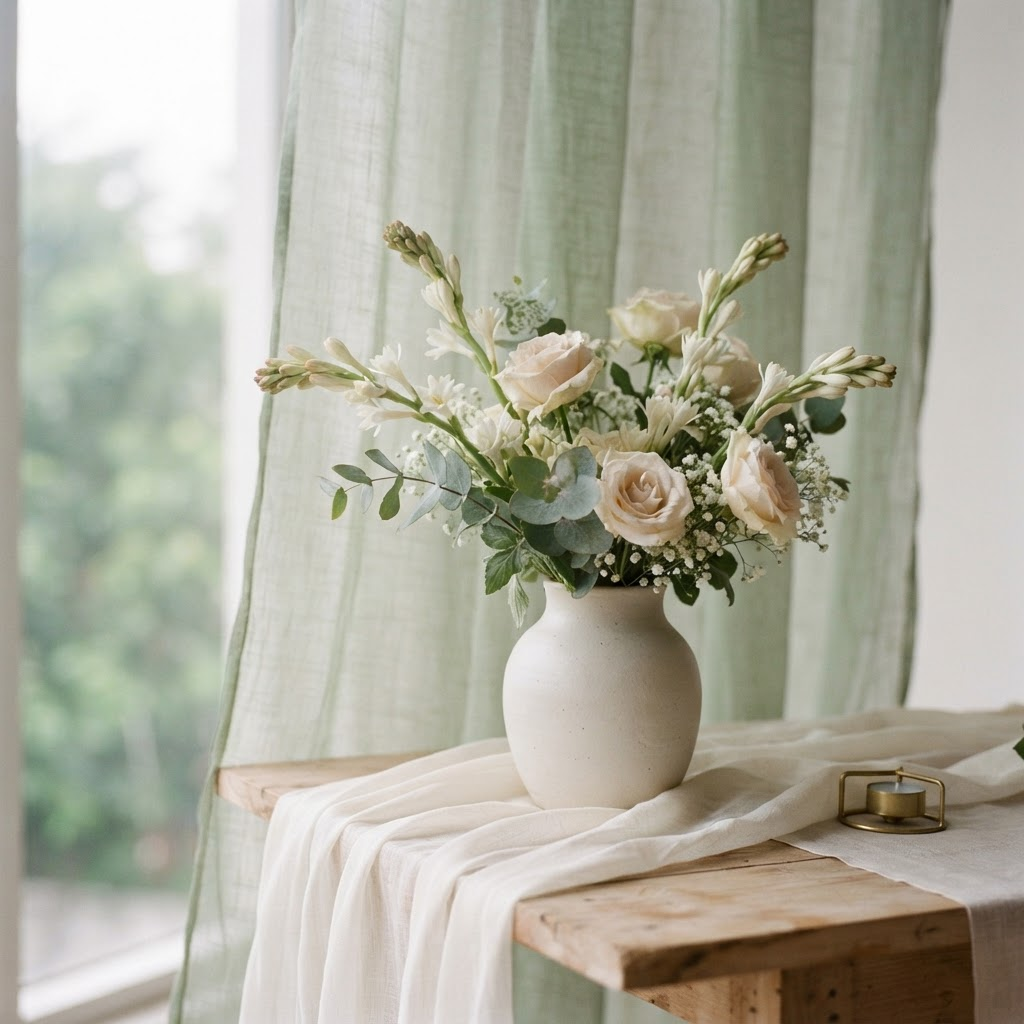
Contemporary minimal
For couples who want photographs, not spectacle. Ivory, sage and one flower repeated. Cheaper than it looks if you skip imported blooms.
Customs vary by region and community — treat this as the common thread, not the rule.
3–6 months before
The families formally agree to the match and exchange rings. Usually a small daytime function at home or a banquet room.
1–2 days before
Turmeric paste is applied to the bride and groom for good luck. Everything gets stained, so plan for old clothes and an outdoor spot.
1–2 days before
Henna is applied to the bride's hands and feet. Intricate bridal work takes four to six hours, so book the artist early in the day.
1 night before
The music night. Family dance performances, a DJ or live dhol, and the largest catering headcount after the reception.
Wedding day
The groom's procession arrives, then the couple takes seven rounds of the sacred fire with the pandit officiating.
Wedding day / next day
The bride departs with her husband's family, followed by the reception — the most formal and most photographed event.